


9/24/25
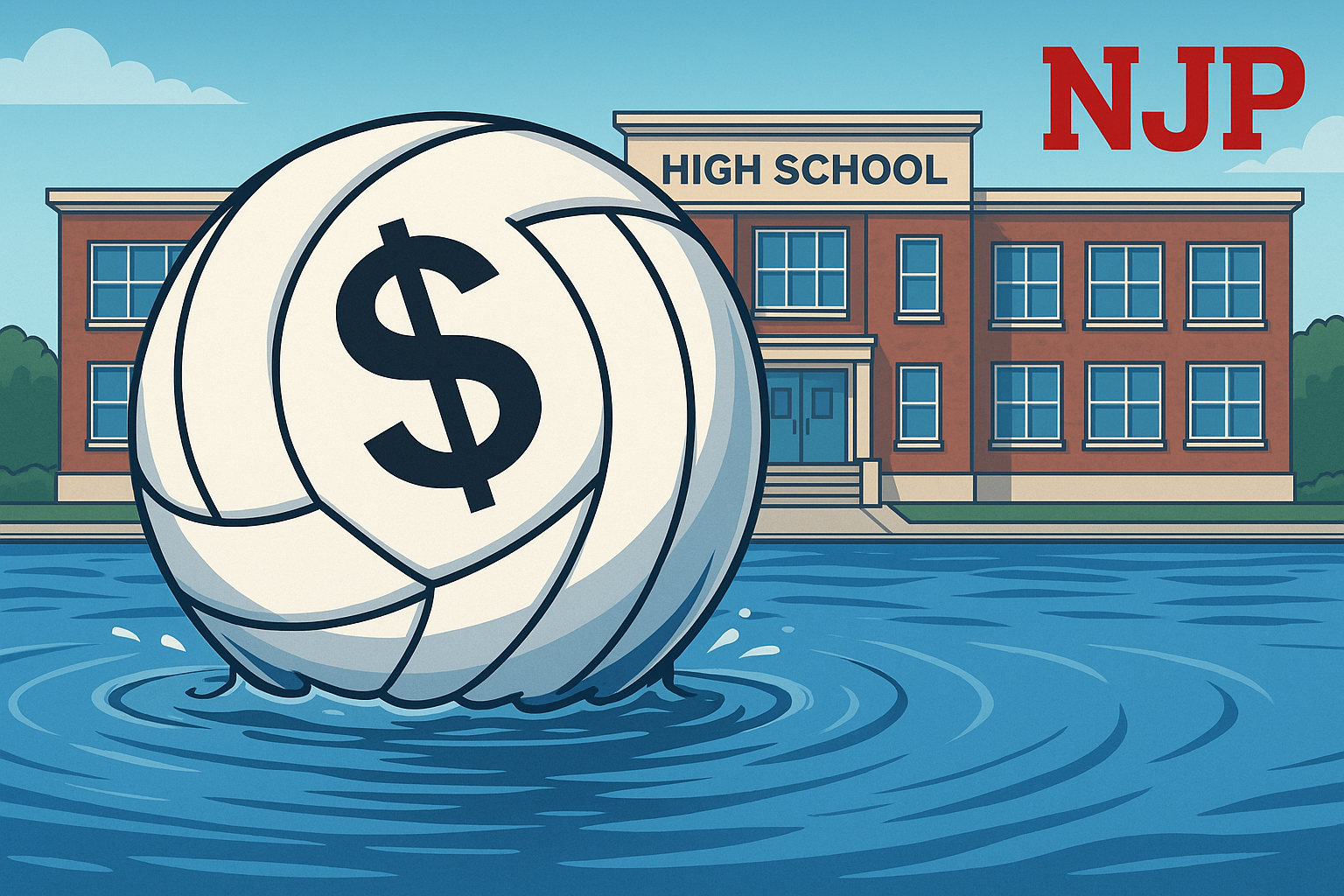
High school sports have long been more than games. They are community cornerstones and developmental pipelines for student-athletes. Yet as school budgets tighten, athletic programs face growing financial strain. Volleyball, a fast-growing but non-revenue sport, is caught in the middle.
While the budget crisis affects schools across the United States, New Jersey provides a revealing case study. The state is a national leader in high school athletics, yet even here, equity gaps and financial pressures are reshaping opportunities. Understanding the scope of the challenge and potential solutions is critical, not only for New Jersey but for the broader national conversation on sustaining high school athletics.
The Budget Reality: Numbers Behind the Strain
Budget concerns in high school sports are not new, but the past decade has heightened the pressures.
During the COVID-19 pandemic, the National Federation of State High School Associations (NFHS) reported that schools faced potential budget cuts between 20 and 50 percent, and state associations anticipated losses ranging from $150,000 to over $2 million. While those estimates were tied to a unique crisis moment, many of the underlying funding gaps remain today as districts grapple with rising costs and the expiration of federal relief funds.
Even outside the pandemic, operational costs have steadily increased. Referee fees at the high school level commonly range from $50 to $100 per match in New Jersey, with additional travel costs in rural areas. Gymnasium upkeep is also costly: refinishing a floor costs about $1.50 per square foot, while full replacement can reach $8 to $10. These expenses compete directly with limited district budgets that must also support academics, transportation, and technology.
For volleyball specifically, these financial realities often mean deferred maintenance, fewer referees, and restricted travel to out-of-district competition.
Volleyball in the Crosshairs
Unlike football or basketball, volleyball rarely generates revenue from ticket sales or sponsorships. Instead, it depends heavily on district funding, booster organizations, and parent fundraising.
Travel Limitations
Tournaments outside of conference play provide invaluable development and exposure for athletes. Yet many schools have scaled back travel, limiting schedules to local opponents. This reduces not only the competitive variety players face but also their visibility to college recruiters.
Referee Shortages
Budget limits intersect with another growing challenge: a shortage of qualified officials. Lower pay and rising travel expenses have driven many referees to retire or switch sports. Schools left with fewer officials experience inconsistent game management, which affects both player safety and the quality of competition.
Facility and Equipment Strain
Basic items like net systems, court markings, and volleyballs are often kept in service long after their intended lifespan. Uniform replacement cycles are extended. These small but visible details impact both performance and program prestige.
In New Jersey, volleyball has become one of the fastest-growing sports, yet it is highly vulnerable to these cutbacks.
The Participation Fee Divide
As districts seek new revenue streams, many have turned to “pay-to-play” policies. Participation fees are now common in a majority of states, though laws governing them vary. Fees range widely, from under $100 per season to more than $1,000 in affluent or suburban districts.
Research highlights the impact on participation. A Michigan High School Athletic Association study found that even $100 fees led to a measurable drop in student-athlete involvement, with rates declining more steeply as fees rose. Families earning under $25,000 annually participate in sports at significantly lower rates than those earning over $100,000, underscoring the equity gap.
In volleyball, where club costs are already substantial, added high school fees can push families to opt out entirely. The result is a two-tiered system where opportunity is shaped less by talent than by income.
From High School to College: A Strained Pipeline
The connection between high school sports and college athletics is direct. For volleyball, diminished resources at the high school level create ripple effects in recruiting and readiness.
- Skill Development: Athletes with limited access to strong competition or updated facilities arrive at the college level less prepared.
- Equity Gaps: Rural and urban schools often face deeper funding shortfalls than suburban districts, narrowing the geographic and socioeconomic diversity of athletes who reach the next level.
- College Sports Pressures: Since 2020, dozens of collegiate athletic programs across the country have been eliminated due to financial strain. While not all were volleyball, the environment underscores how fragile the athletic pipeline has become.
In this context, New Jersey’s strong volleyball culture helps maintain a steady flow of talent, but the risks are real if funding inequities widen.
New Jersey as Case Study
New Jersey offers a revealing window into both the strengths and vulnerabilities of high school sports.
- Breadth of Offerings: The NJSIAA sponsors 32 state championship-level sports, including 16 for female athletes. This places New Jersey among national leaders in both opportunities and gender equity.
- Funding Model: The state spends more than $200 million annually on high school athletics, but receives no direct state aid for sports programs. Instead, districts rely heavily on local taxpayers. Affluent districts manage, but schools in urban and rural communities face difficult trade-offs.
- Equity Challenge: This model creates visible disparities. In some towns, volleyball thrives with well-maintained gyms, travel budgets, and deep coaching staffs. In others, programs survive only with volunteer support and fundraising.
Despite these challenges, volleyball has emerged as a standout sport in New Jersey, particularly with the rise of boys volleyball alongside established girls programs.
Club Volleyball: Complement and Complication
For many athletes, club volleyball has become the true developmental pathway. New Jersey is home to 28 GEVA-approved clubs, ranging from budget-friendly to elite.
- Costs: Mid-range clubs typically charge $2,500 to $3,500 per season, while elite programs can exceed $4,000 when travel is included. Even “affordable” clubs still require significant financial commitment.
- Advantages: Clubs provide extended seasons, specialized coaching, and national competition. For college-bound athletes, they are often essential.
- Challenges: The cost structure creates a two-track system. Families with resources access elite training, while others rely solely on high school programs that may already be underfunded.
Some clubs have made efforts to support accessibility through clinics, scholarships, or partnerships with schools. Still, the divide is clear, and high school programs often find themselves in tension with club commitments over scheduling, philosophy, and team chemistry.
Creative Solutions Emerging
Amid these pressures, innovation has surfaced at both the local and state levels.
- Facility Sharing: Districts form consortiums to share gyms, equipment, and maintenance costs.
- Technology: Live streaming matches allows athletes to gain college recruiting exposure even with limited travel. Video analysis tools help coaches maximize limited practice time.
- Community Partnerships: Local businesses increasingly sponsor teams, funding uniforms, travel, or specific equipment needs.
- Grant Funding: Programs like DICK’S Sporting Goods Foundation Sports Matter grants and nonprofits such as All Kids Play provide targeted assistance for underserved programs.
- Fundraising Evolution: Beyond car washes and bake sales, schools now use crowdfunding platforms, alumni networks, and signature annual events to raise meaningful sums.
These strategies cannot fully replace stable funding, but they demonstrate resilience and creativity within the volleyball community.
The Foundation Gap: Learning from First Point
Perhaps the most striking difference between volleyball’s growth at the college level and the struggles at the high school level is the presence of dedicated foundation support.
The First Point Volleyball Foundation, founded in 2016, has raised more than $5 million to help start over 40 collegiate men’s programs, including six at historically Black colleges and universities. In 2025, First Point merged with the USA Volleyball Foundation, expanding its resources and reach.
Yet no equivalent foundation exists for high school volleyball. While some local booster clubs fill the gap, there is no statewide or national initiative focused exclusively on sustaining and growing high school programs.
For New Jersey, this represents both a challenge and an opportunity. With its strong volleyball culture and successful alumni base, the state is well-positioned to pioneer a high school volleyball foundation.
A Path Forward for New Jersey
A New Jersey High School Volleyball Foundation could:
- Provide startup grants for schools wanting to add volleyball programs
- Fund essential equipment and facility improvements
- Support referee training and compensation to address shortages
- Offer scholarships for athletes who cannot afford participation fees or club costs
- Develop county-level committees to identify needs and direct resources
This type of initiative would not replace district funding but would create a safety net to ensure volleyball remains accessible and competitive across all communities.
Conclusion: Preserving Opportunity and Excellence
The budget crisis in high school sports is real, but it is not insurmountable. For volleyball, the stakes are high. Without creative solutions, equity gaps will widen, and opportunities will shrink for athletes whose only barrier is financial.
New Jersey’s leadership in high school athletics brings responsibility. By building partnerships among schools, clubs, alumni, and businesses, the state can model solutions for the nation. Establishing a dedicated foundation for high school volleyball could ensure that talent and passion, not household income, determine who thrives in the sport.
Sports participation is more than competition. It is linked to higher graduation rates, stronger academics, and lifelong health benefits. For female athletes, it is closely tied to college completion and career success. Preserving access to volleyball and other sports is therefore not just about athletics, but about investing in the next generation.
New Jersey volleyball stands at a crossroads. With vision and collaboration, the state can lead the way in preserving athletic excellence and accessibility, ensuring that the gymnasiums of today continue to produce the leaders, teammates, and champions of tomorrow.
Sources and References
- National Federation of State High School Associations (NFHS) – budget impact reports, The Case for High School Activities
- Aspen Institute Project Play – research on youth sports participation and pay-to-play
- U.S. Department of Education – school finance and funding data
- Michigan High School Athletic Association (MHSAA) – participation fee studies and reports
- Women’s Sports Foundation – research on barriers for girls in sports
- NJSIAA – championship sports list and funding model
- Garden Empire Volleyball Association (GEVA) – club listings and governance
- DICK’S Sporting Goods Foundation Sports Matter – grants for youth sports
- All Kids Play – nonprofit support for underserved athletic programs
- First Point Volleyball Foundation – funding programs for men’s volleyball
- USA Volleyball Foundation – national fundraising for volleyball development